ServicesBumper Repair
Bumper Repair in Corcoran
We repair cracked, torn and pushed-in bumpers on cars, trucks and SUVs. That means welding the plastic from behind, rebuilding broken mounting tabs, checking the absorber and reinforcement bar underneath, and refinishing with a primer that flexes with the cover so the paint does not crack later.
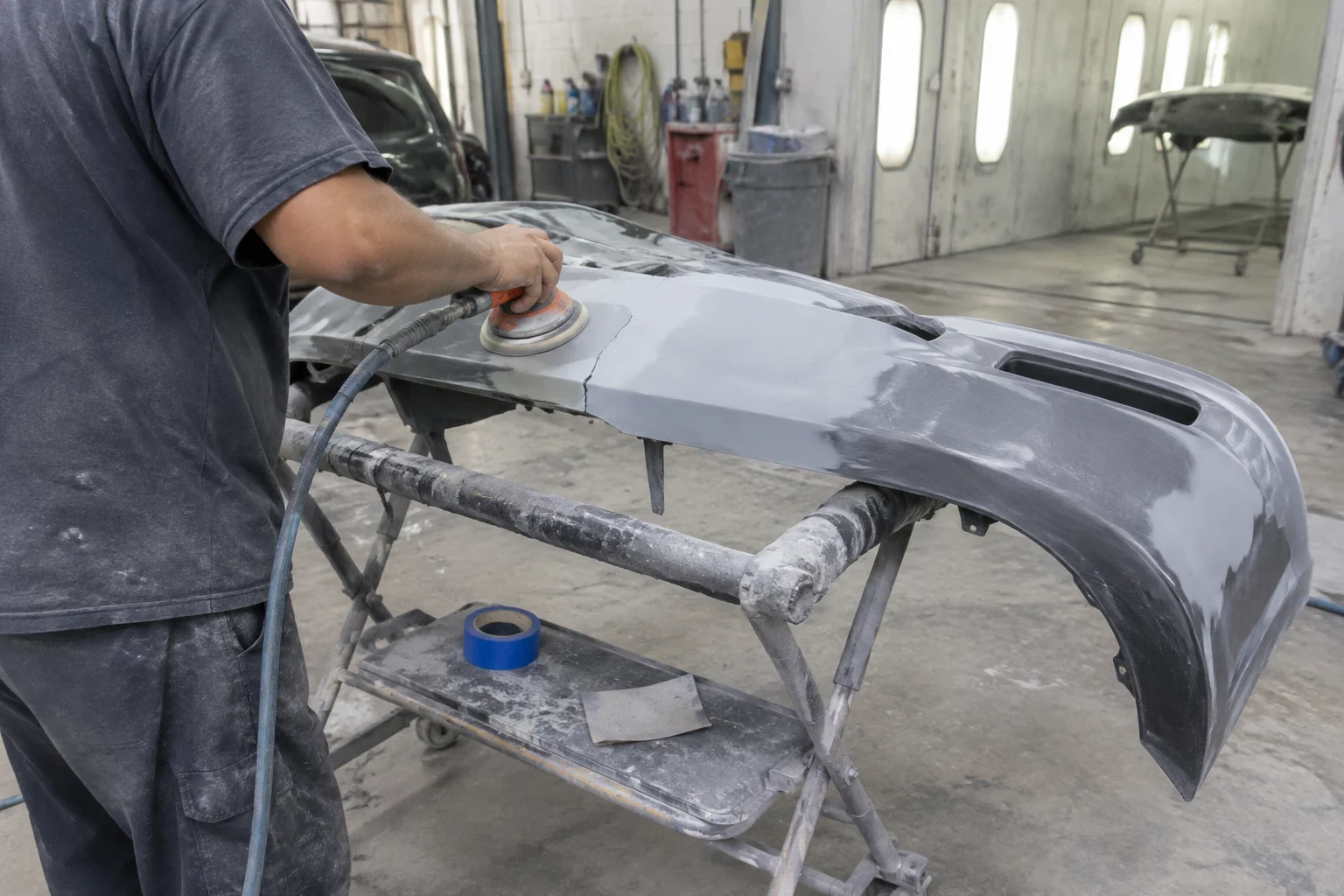
What Bumper Repair Covers
What looks like one bumper is really a stack of parts. The painted outer cover is molded thermoplastic, most often polypropylene or a TPO blend. Under it sits an energy absorber made of foam or honeycomb plastic, and under that is the reinforcement beam, a steel or aluminum member mounted to the front or rear ends of the frame rails. A low-speed parking-lot bump may only mark the cover. A harder impact can crush the absorber or kink the beam while the flexible cover pops back and looks nearly normal.
Most cover damage is repairable: cracks, tears of a few inches, gouges, distortion and broken tabs. We replace the cover when the plastic is torn across a body line, badly stretched, or aged so brittle that a weld will not hold. You get a straight answer on which one your car needs, along with the reason.
Damage from a heavier hit that carries into the frame rails or crumple zones becomes collision repair or frame straightening, and we will tell you when the inspection points that way.
What Goes Into a Bumper Repair That Lasts
Removal, not in-place patching
We take the cover off the car. That is the only way to see the absorber and bar, weld from the back side, and inspect clips and brackets that hide behind the fascia.
Plastic identification and welding
Every cover is stamped with its resin code, such as PP, TPO or PC/PBT. We match the filler rod to that code and use a nitrogen hot-air welder, then add stainless reinforcing mesh on the back of the crack. A weld with the wrong rod looks fine for a month and then lets go.
Rebuilt mounting tabs
Broken tabs are why so many repaired bumpers sag or leave an uneven gap at the fender. We rebuild them by welding new plastic tab material onto the cover or using tab repair kits made for plastic, and we replace any cracked brackets and push clips so the cover lines up and stays tight.
Absorber and reinforcement check
Crushed foam absorbers do not recover, and a kinked bar will not protect you in the next hit. We replace either one when it is damaged rather than hiding it behind a new-looking cover.
Sensor and bracket care
Many bumpers carry parking sensors, and some carry radar for adaptive cruise control or automatic braking. We handle those brackets carefully, keep paint film thickness within what the sensor tolerates, and tell you up front if the vehicle will need a calibration after the repair.
Refinishing made for plastic
Bare plastic gets adhesion promoter, then primer and clear with flex additive so the finish bends with the cover instead of cracking. Color is blended into the neighboring panels, a detail our Paint and Refinishing page explains further.
Signs Your Bumper Needs Attention
A gap at the fender or headlight
An uneven seam where the cover meets the fender usually means a broken tab or bent bracket. It will keep working loose at highway speed.
Cracks, even small ones
Plastic cracks spread with vibration and with the heat cycles of a Central Valley summer. A short crack welded now is a simpler repair than a split later.
Paint flaking off a repaired area
Peeling or spider-web cracks on an older repair point to missing adhesion promoter or rigid primer. The finish has to come off and be redone properly.
Sensor warnings after a bump
A parking sensor that beeps constantly or a driver-assist warning after a minor hit can mean a pushed-in mount behind the cover.
The bumper sits lower than it did
Sagging after a curb strike often means a crushed absorber or a cracked support bracket, not just loose clips.
How Your Bumper Repair Runs
- 1
Phone conversation first
You call and tell us what happened and what you see. We explain what we will need to look at, and if an insurance claim is involved, our Insurance Claims page covers how that fits in.
- 2
Inspection and written estimate
At the shop we look behind the cover where we can, note the resin type and any sensors, and write the estimate line by line: repair or replace, parts, refinish and any calibration.
- 3
Teardown and structural repair
The cover comes off. We weld cracks, rebuild tabs, and replace any damaged absorber, bar, brackets or clips, photographing what we find behind the fascia.
- 4
Refinish and reinstall
After adhesion promoter, flexible primer, base and clear, the cover goes back on. We check gaps against the fender, hood and lights and test every sensor.
- 5
Final walk-around
When you pick up your car we show you the repair, explain what was replaced and why, and answer any questions.
What Moves the Cost of Bumper Repair
Two bumpers with similar scuffs can price very differently once the cover is off. The estimate reflects what is behind the fascia and what the car carries, so we explain each line rather than giving a number over the phone.
- Repair versus replacement
- A welded crack with refinish is usually less than a new cover plus paint. Replacement can make sense when the damage is extensive or the plastic is brittle.
- Hidden parts behind the cover
- A crushed absorber, bent reinforcement bar or broken brackets each add parts and labor that a quick look from outside will not reveal.
- Sensors and driver-assist equipment
- Parking sensors, radar units and their brackets add time to removal and may require calibration after the repair.
- Paint color and blending
- Tri-coat pearls and some metallic colors take more steps, and blending into the fenders adds refinish area beyond the bumper itself.
Bumper Repair Questions
Something not covered here? (559) 838-4456
Can a cracked plastic bumper really be repaired, or does it need to be replaced?
Most cracks, tears and broken tabs can be repaired if the plastic is welded with a matching rod and reinforced from behind. We recommend replacement when the tear crosses a body line, the cover is badly stretched, or the plastic has aged too brittle to weld well. You will see the reason on the estimate either way.
Why does my bumper look fine but the shop says there is damage?
Thermoplastic covers flex and spring back. The foam absorber and the bar behind them do not. A cover that looks normal can hide a crushed absorber or bent bracket, which is why we remove the cover before finalizing the repair.
Will the paint on the repaired bumper crack later?
It should not when the refinish is done for plastic. We use adhesion promoter on bare plastic and flex additive in the primer and clear so the paint moves with the cover. Paint applied the same way as on a steel panel is what usually cracks or peels.
My car has parking sensors and radar in the bumper. Is that a problem?
It means more care, not a problem. We remove and reinstall the sensors and their brackets, keep paint thickness within the range the units tolerate, and tell you before work starts if the vehicle maker calls for a calibration.
Who works on my bumper?
Our shop is I-CAR Platinum certified, which reflects ongoing training in current repair methods, including plastic repair and work around driver-assist sensors. We also serve drivers from Hanford, Tulare and the surrounding area.
Get Your Bumper Sitting Right Again
Tell us what hit it and what you are seeing. We will explain what the inspection involves and set a time to look at your car at the shop.