ServicesDent Repair
Dent Repair in Corcoran
We take dents out of your car by working the metal back where it belongs, without paint whenever the finish is intact. When it isn't, we straighten, fill thin and refinish so the panel holds its shape and the repair never shows.
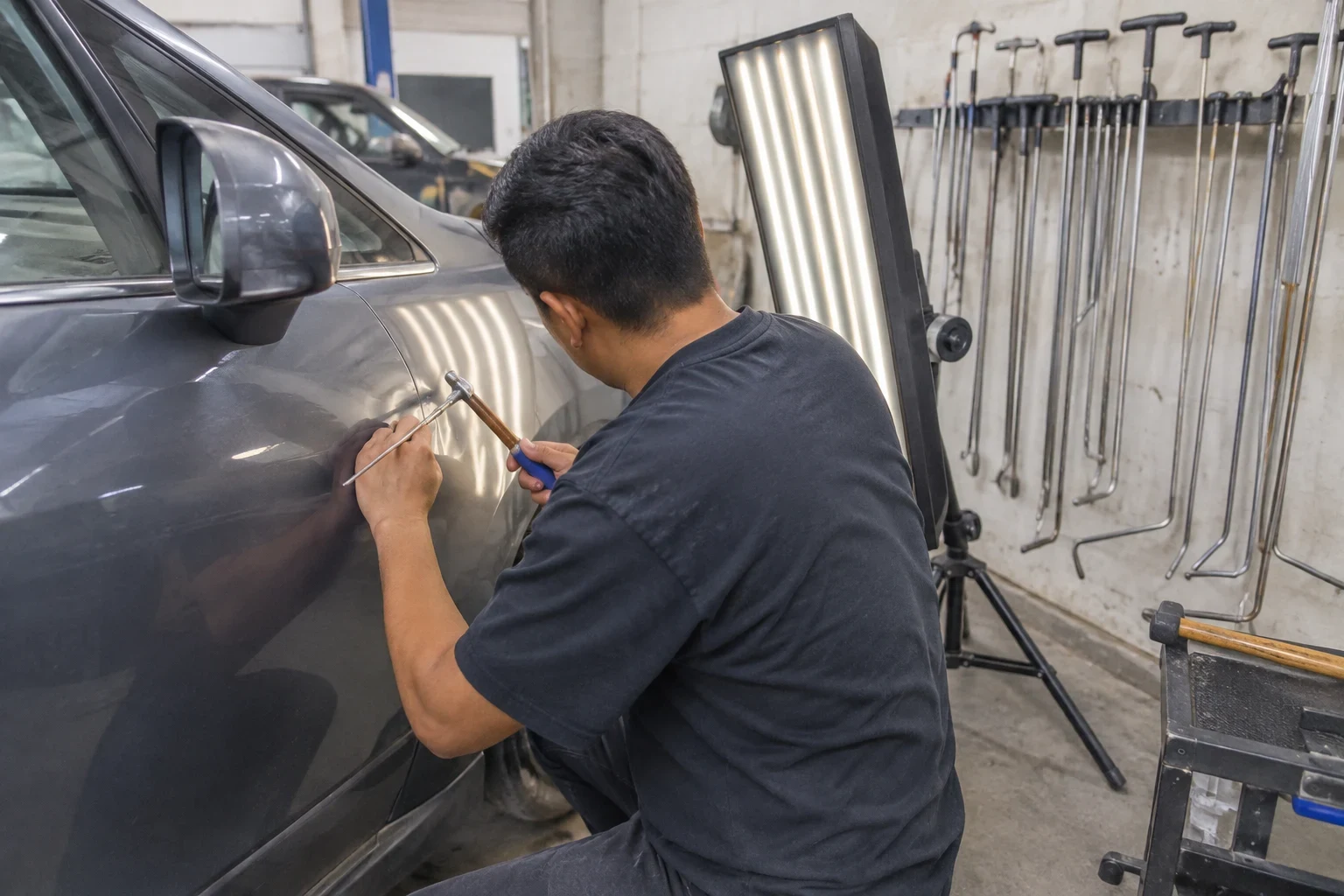
Moving metal back instead of covering it up
A dent is steel or aluminum that has been pushed out of shape and stretched slightly in the process. The goal of the repair is to return that metal to its original contour. Paintless dent repair does this from behind the panel with rods and from the front with glue tabs, so the factory paint stays on your vehicle. That original finish was cured at temperatures no body shop booth reaches, and it sticks to the metal better than any refinish.
Paintless work is the right call when the paint has no cracks and the metal is not sharply creased or torn. If the paint has split, or the dent sits on a stretched crease, we use conventional repair: pull and shrink the metal, apply a thin skim of filler, prime and refinish.
Our shop is I-CAR Platinum certified, and dent work is where that training shows. Knowing how a high-strength steel door skin or an aluminum hood reacts to pressure and heat is what keeps a repair from rippling or cracking later.
What our dent repair covers
- Paintless dent removal
- We push dents out from behind with steel rods, working in small, controlled presses while reading the panel under a line board light. Glue-pull tabs handle spots where there is no rear access. The factory finish and corrosion protection stay untouched.
- Careful access to the back of the panel
- Reaching a dent often means removing a tail lamp, door trim panel, headliner edge or inner fender liner. We remove clips and fasteners by hand, replace any that break, and reseal vapor barriers so doors stay quiet and dry.
- Crease and body line work
- A dent across a sharp body line is the hardest kind to make invisible. We rebuild the line first, then level the surrounding flat areas, because a line that wanders even slightly catches the light.
- Conventional repair when paint is damaged
- For cracked paint or stretched metal, we pull the dent, shrink high spots with controlled heat and keep filler to a thin skim over bare, properly prepped metal. The refinish is handled by the same standards described on our Paint and Refinishing page.
- Aluminum and high-strength steel
- Aluminum work-hardens and cracks if it is pushed too far too fast, and high-strength steel resists reshaping. We adjust tools, pressure and gentle warming to each material instead of treating every panel like mild steel.
Signs your car needs dent repair
Parking lot door dings
Small round dents along the doors, usually at the same height as the next car's door edge. These are often ideal for paintless removal if the paint is unbroken.
Hail dimples on the roof or hood
Shallow dents spread across the horizontal panels. They are easiest to see at an angle in low sun, and they rarely damage the paint, which makes paintless repair a strong option.
A crease you can feel
Run your hand across the dent. A sharp ridge means the metal has stretched, and it may need more than rod work to lie flat again.
Chipped or cracked paint in the dent
Once the finish breaks, bare steel is exposed. In Corcoran's long, hot summers and damp winter fog, that spot can start to rust under the surrounding paint, so it should be repaired rather than left.
A panel that pops or flexes
If pressing near the dent makes the metal snap in and out, the panel has lost tension. This oil-canning needs shrinking, not just pushing.
How the repair goes
- 1
Inspection under light
We look at the dent under a reflective line board and check the paint for hairline cracks. That tells us whether paintless repair will work or whether the panel needs conventional repair.
- 2
A written estimate
You get a line-item estimate showing the method, any trim or lamps we need to remove, and any refinish. If paintless won't give a clean result, we tell you before starting.
- 3
Access and protection
We remove the parts that block access, tape off edges and protect the surrounding paint so tools never contact finished areas they don't need to.
- 4
Working the metal
Paintless repair is slow by design: hundreds of small presses, checked constantly against the light, so the metal is not over-pushed into a high spot. Conventional repair adds shrinking, a thin skim of filler, primer and refinish.
- 5
Final check and reassembly
We reinstall trim with new clips where needed, check door and lamp fit, and inspect the panel from several angles before you pick up your vehicle.
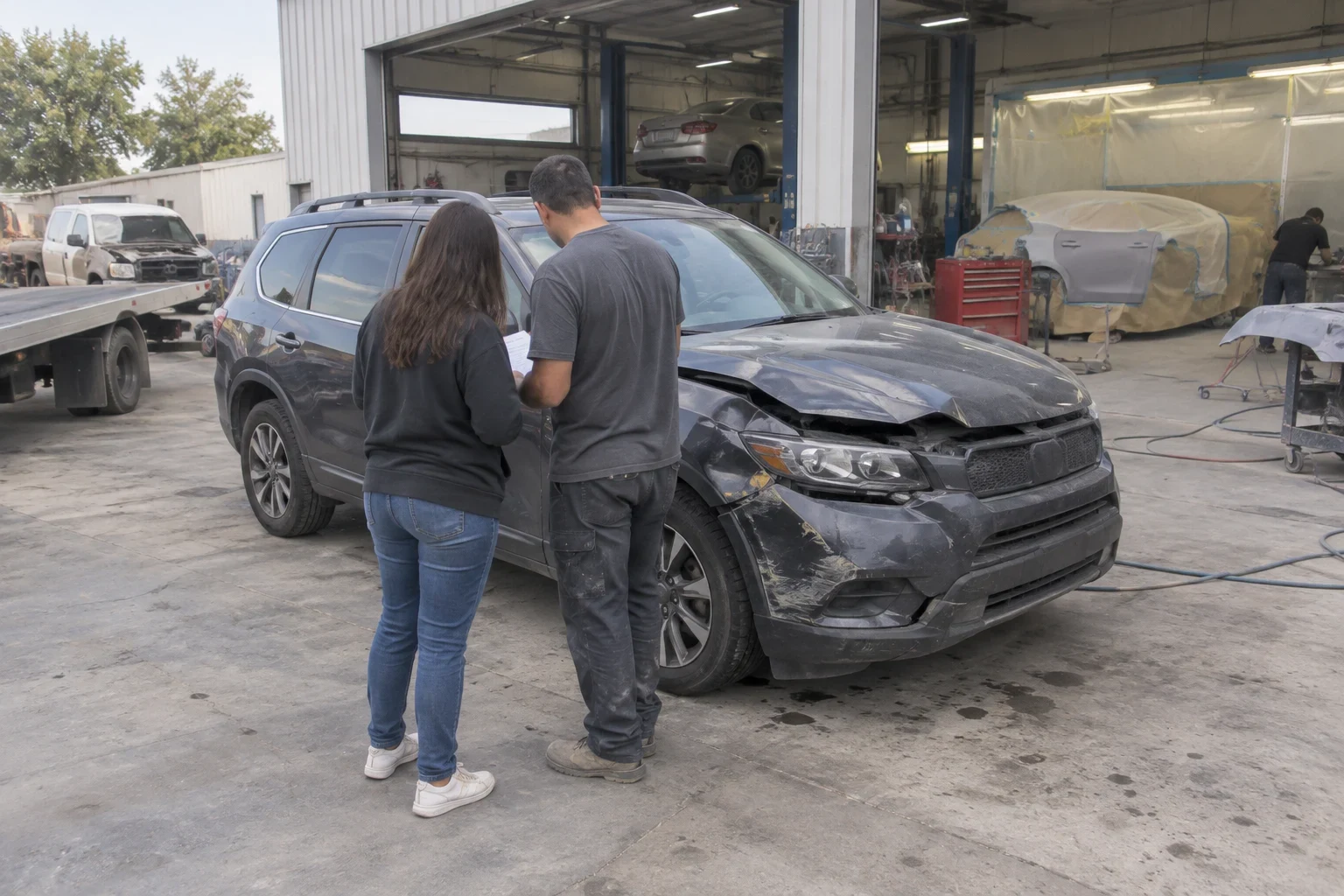
What moves the cost of dent repair
Dent repair is priced by the work the dent actually requires, not by a flat number per dent. Two dents the same size can take very different amounts of time. Your estimate lists each factor below so you can see where the labor goes.
- Size, depth and count
- A single shallow ding is quick work. Deep dents, or dozens of hail dimples across a roof and hood, take far more time with the rods.
- Location on the panel
- Dents on a body line, near a panel edge or over an inner brace are harder to reach and harder to finish cleanly.
- Paint condition
- Intact paint allows paintless repair. Cracked paint means filler, primer and refinishing, plus blending into neighboring panels so the color matches.
- Panel material and access
- Aluminum and high-strength steel take more time. So does removing headliners, lamps or interior trim to get behind the dent.
Common questions about fixing dents
Something not covered here? (559) 838-4456
Does paintless removal work on every dent?
It works only when the finish has no breaks and the metal is not torn or folded into a tight crease. Most door dings and hail dimples meet those conditions. Before we pick a method, we examine the paint for hairline cracks under the light. If rod work would leave a visible flaw, we tell you that up front and walk you through the conventional option.
Could a repaired dent reappear down the road?
A panel that has been reshaped properly stays put, because the metal is back at its original contour and has nothing pulling it out of place. Problems come from hurried work that leaves high spots or puts stress on the paint. That is why we compare every pass against the line board before moving to the next.
How many days will the repair keep my vehicle at the shop?
The method sets the timeline. A handful of door dings can be done in a few hours. Hail damage spread over several panels, or a conventional repair that needs filler and refinishing, may take several days, and your estimate includes the expected time.
Is a dent worth running through my insurance?
With one small ding, plenty of drivers simply pay for the repair, since the bill can come in under the deductible. Hail is typically covered under comprehensive and often makes sense to claim. Our Insurance Claims page covers how we coordinate the estimate with your insurer.
What happens if I put off fixing a small dent?
When the finish is unbroken, delay mostly affects appearance. When the paint is chipped or split, exposed metal can begin rusting beneath the edges of the surrounding finish, and a quick fix grows into a bigger one.
Get the dent looked at properly
Tell us where the dent sits and whether the paint is broken. We'll say which method fits, then arrange a visit to our shop so we can see your car under the light and write up the estimate.