ServicesPaint and Refinishing
Paint and Refinishing in Corcoran
We refinish panels with attention to the steps you never see: sanding to a clean featheredge, sealing bare metal, checking color on spray-out cards and blending into the next panel. You get paint that bonds properly, matches in daylight and keeps its gloss.
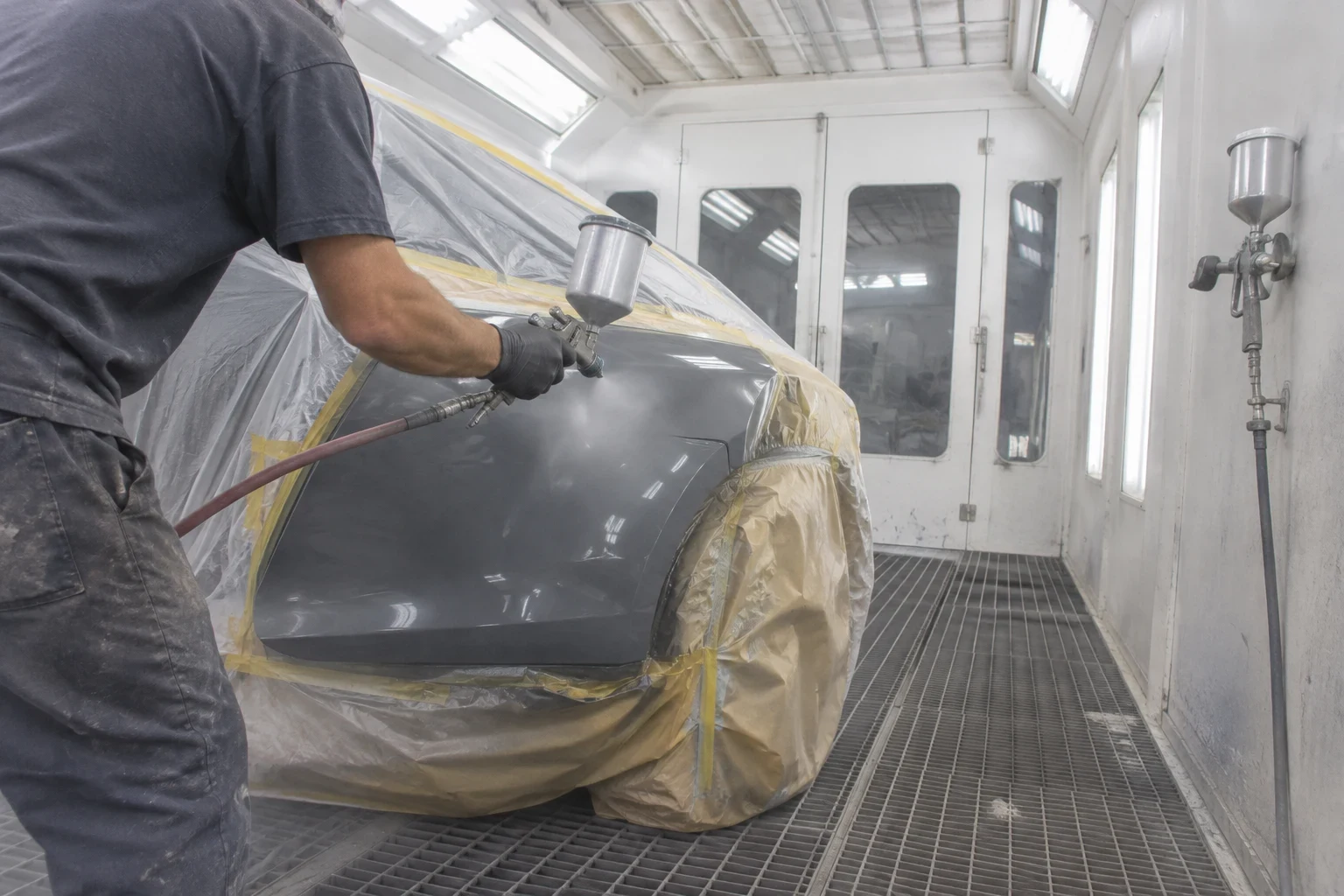
What Refinishing Really Involves
Factory paint is a system of layers: an electrocoat on the metal, primer, a thin basecoat that carries the color, and a clear coat that takes the UV and the weather. When one layer fails, the ones below it start failing too. A scratch through the clear lets moisture and sun reach the basecoat, and a chip down to metal becomes rust that creeps under the surrounding paint.
Good refinishing rebuilds that system in order. Most paint that peels or fades early was not sprayed badly. It was sprayed over poor prep: dust in the scratches, an unsealed edge, or primer that never fully cured. Our shop is I-CAR Platinum certified, and that training shows up in exactly those details.
Refinishing is the right call for clear coat failure, deep scratches, faded or chalky panels, and any panel that has had body work. It is also the final stage of most collision repair and bumper repair jobs we do.
What the Work Includes
Featheredging and surface prep
We sand the damaged area so the old paint tapers smoothly into the repair instead of leaving a step. The panel is cleaned with wax and grease remover before and after sanding, because silicone and fingerprint oils cause fisheyes in fresh paint.
Sealing bare metal
Any exposed steel or aluminum gets the right primer before anything else goes on. Filler and surfacer over raw metal hold moisture against it and are a common reason rust bubbles show up a year later.
Color matching on spray-out cards
We start from your car's paint code, then spray test cards and compare them to the panel in daylight. Factory colors vary from batch to batch, so the code alone is only a starting point.
Blending into adjacent panels
Metallic and pearl colors change shade depending on how the flakes settle. Fading the new color into the neighboring panel hides that difference so your eye does not catch a line at the door gap.
Clear coat, cure, and finish
We apply a urethane clear coat, cure it fully, then wet sand and polish any texture or dust nibs so the finish matches the surrounding factory gloss.
When Your Paint Is Due for Refinishing
Clear coat flaking away
Milky, hazy areas on the hood, roof or trunk lid mean the clear has stopped bonding to the color beneath it. That failure keeps spreading, and the exposed basecoat fades quickly. Hot summer sun makes it move faster.
Scratches that catch a fingernail
When your nail snags in a scratch, it has cut through the clear and probably into color or primer. No amount of polishing reaches that deep.
Bubbling near a chip or edge
Raised blisters along door bottoms, wheel openings or around a stone chip show that moisture has already gotten under the paint. The rust must be ground back to clean metal before refinishing.
A panel that reads a different shade
A fender or door that looks lighter or darker than the panel next to it outdoors usually traces back to an earlier repair that was never blended.
Dull spots from sap or bird droppings
Left to bake in the sun, these etch into the clear coat and leave a rough, flat patch that a wash will not take out.
How a Paint Job Moves Through Our Shop
- 1
Inspection and paint code
We examine the damage under good lighting, gauge its depth and look up your vehicle's paint code. Then we explain which areas need refinishing and which only need polishing.
- 2
Disassembly and masking
Where it is practical, trim, emblems, handles and lamps come off instead of being taped around. With the parts out, paint can wrap the panel edges and there is no hard tape edge left to lift later.
- 3
Repair, prime and block sand
Body work is completed, exposed metal is sealed and primer goes on, then gets block sanded flat. This is the step that decides whether the panel looks wavy once the gloss is on.
- 4
Base, clear and cure
Color is sprayed in the booth and blended where needed, then clear coat follows. The panel is fully cured before anyone touches it again.
- 5
Finish, reassembly and final check
We wet sand and buff out any texture, refit every part we removed, and walk around your car outdoors, viewing the paint from several angles before you drive away.
What Moves the Price of Paint Work
Most of what you pay for in refinishing is time at the bench and in the booth, not the paint in the can. Prep, removing parts and blending eat up the bulk of the hours. Before any work starts, we go over each line of the estimate with you so the labor time is easy to follow.
- Panels painted and blended
- Repairing one panel usually means carrying color partway onto the panel beside it. Every extra panel brings its own sanding, masking and material.
- How far down the damage goes
- A scuff that stays in the clear coat is a much smaller job than a gouge into primer or bare metal, which calls for filler, primer and block sanding before any color.
- Type of color
- Solid colors are the most straightforward. Metallics need more care in the blend, and tri-coat pearls add a separate mid-coat plus extra test cards to get the shade right.
- Removing and refitting parts
- Mirrors, sensors, moldings and handles take labor to pull off and put back. Some retaining clips are one-time-use and get replaced with new ones.
- Corrosion under the surface
- Rust that turns up once sanding starts must be cut back to bright metal, and that can add hours to the job.
Paint and Refinishing Questions
Something not covered here? (559) 838-4456
Will the new paint blend with the original finish on my car?
We aim for a match on every panel, and we get there with sprayed test cards and blending instead of trusting the paint code by itself. Your existing paint has aged in the sun, so we match the color it is today rather than the factory sample. Before you pick up, we look at the panel outside in natural light.
Can you fix just one spot instead of the whole panel?
In some cases. A small blemish close to a panel edge can sometimes be spot repaired and faded out. In the open center of a hood or door, a spot repair tends to leave a visible ring, so we will say plainly when refinishing the full panel makes more sense.
When can I wash or wax my car after it is painted?
A gentle rinse with plain water is fine from day one. Hold off on wax or sealant for roughly a month, and skip brush-type automatic washes for the first few weeks while the clear coat keeps hardening.
My clear coat is peeling. Do I need the whole car painted?
Usually not. Clear coat tends to fail first on the flat, sun-facing surfaces: roof, hood and trunk lid. We refinish the panels that have failed and look over the rest for early warning signs, so you can choose what to handle now and what can wait.
Will insurance pay for paint work?
Paint damage from a covered event such as a collision, vandalism or hail is normally included in the insurance claim. Fading and peeling that come from age usually are not. Our Insurance Claims page covers how we work alongside your adjuster.
Get an Honest Look at Your Paint
Bring your car in and we will show you how deep the damage goes and what it takes to fix it right. Phone us first and we will set a time that works for you.