ServicesFrame Straightening
Frame Straightening in Corcoran
A hit that bends the structure under your car shows up later as uneven gaps, a pulling steering wheel and tires that wear on one edge. We measure your vehicle against factory dimensions, pull it back where it belongs and prove it with a final measurement.
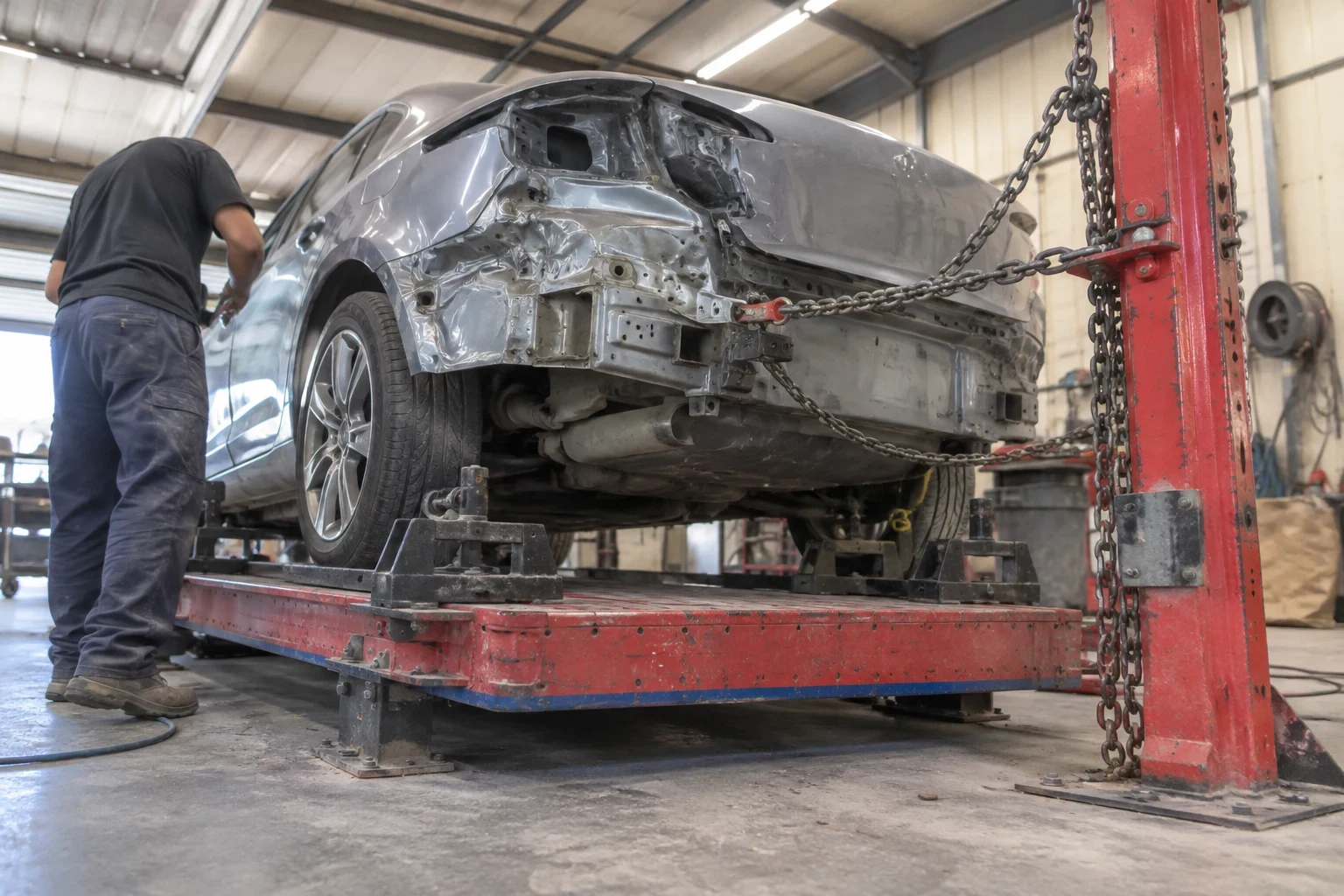
What frame straightening actually corrects
On most cars and small SUVs built in recent decades, there is no separate frame. The rails, pillars, aprons and floor pan are joined by thousands of spot welds into a single structure called a unibody. Pickups and larger SUVs still ride on a separate ladder frame. Either way, the suspension, engine cradle and body panels bolt to fixed points on that structure. When a collision moves those points even a few millimeters, everything attached to them sits wrong.
Straightening means putting those points back where the manufacturer placed them. We anchor the vehicle to a frame bench, measure the control points, and use hydraulic towers to pull the damaged section in the opposite direction of the impact. Metal has memory of its shape only up to a point. Past that, a rail is kinked or work-hardened and the right answer is sectioning or replacing it, not pulling harder. We tell you which one your car needs before any work starts.
This is often one part of a larger collision repair. Once the structure is square, panels, the bumper and paint and refinishing go on in their correct positions instead of being shimmed to hide a twist.
What the work includes
Pre-repair measurement
We record the location of the vehicle's control points and compare them with the published factory dimensions. The printout shows exactly which points moved and by how much.
Anchoring and controlled pulls
The car is clamped at the pinch welds or frame horns so it cannot shift during a pull. We pull in stages, relieving stress as we go, rather than yanking a rail in one move that can tear spot welds.
Section and rail replacement when needed
If a rail is kinked beyond repair, we cut and replace it at the locations the manufacturer specifies, using the welding method and corrosion protection the repair procedure calls for.
Seam sealer and corrosion protection
Pulling and welding disturb factory sealer and coatings. We restore seam sealer and apply cavity wax inside closed sections so the repaired area does not start rusting from the inside.
Final measurement and alignment check
We measure again after the pulls and before the car leaves the bench. A wheel alignment follows so suspension angles are confirmed on the corrected structure.
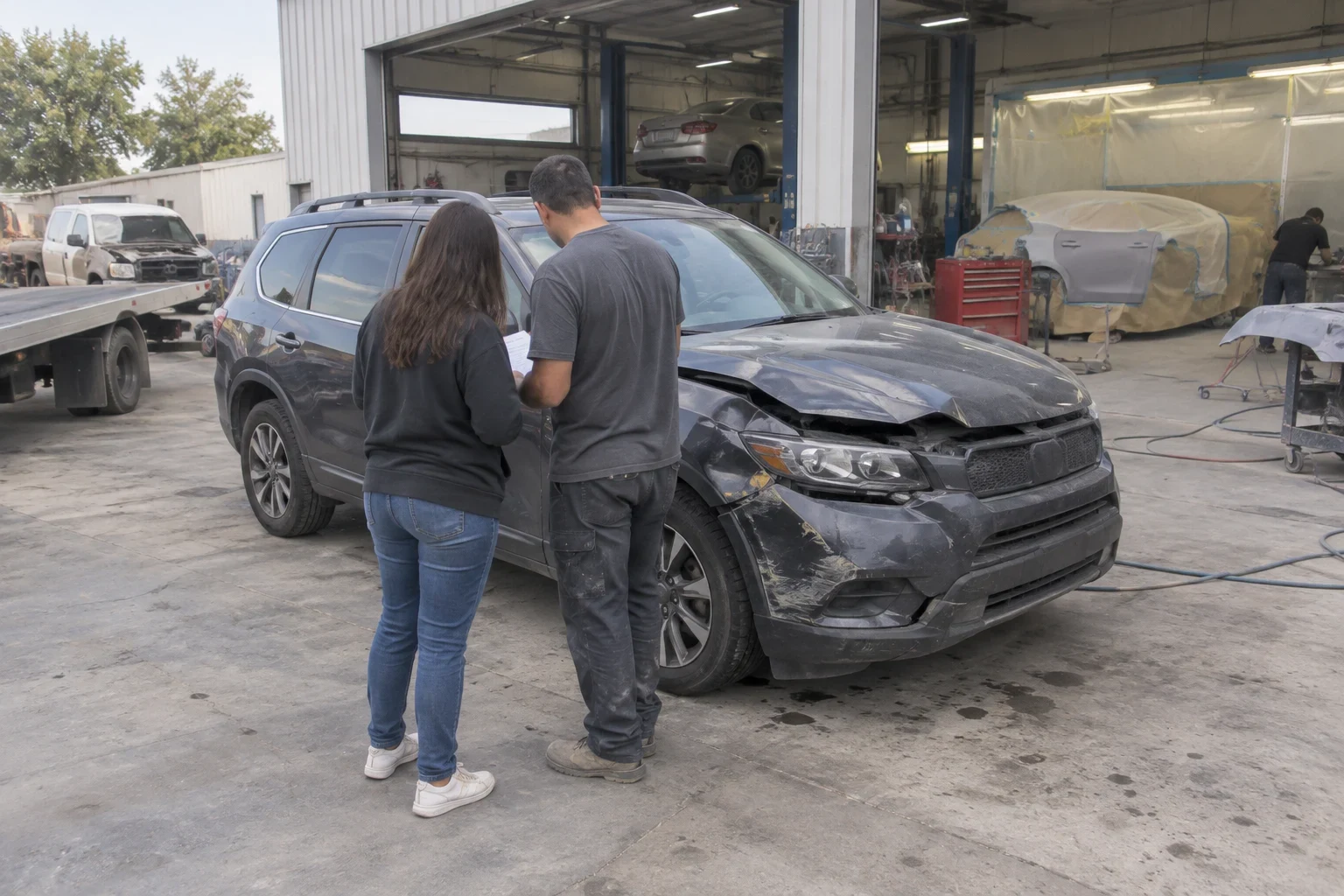
Signs the structure under your car has moved
- Panel gaps that changed
- A hood edge sitting closer to one fender, or a door gap wider at the top than the bottom, often means the apron or pillar moved behind it.
- Doors or trunk that bind
- If a door now needs a firm push to latch, or the trunk lid catches, the opening it closes into is no longer square.
- Steering pulls or an off-center wheel
- An alignment shop may not be able to correct camber or setback if the suspension mounts themselves have shifted. That points to structural damage, not just bent tie rods.
- One tire wearing on its edge
- Uneven wear after an impact, especially a hard hit to a wheel from a curb or a deep rut on a rural road, can mean the mount or rail is out of position.
- Wrinkles under the car
- Creases in the floor pan, rails or rocker panels are a direct sign the metal absorbed crash energy. These are designed crush zones, and once they fold, they need correct repair.
How a frame straightening job runs
- 1
Inspection and teardown
We remove the bumper cover and damaged parts to see the structure directly. Hidden damage is common, so we document what we find with photos before writing the estimate.
- 2
Measure and plan the pulls
Measurements tell us which direction each point moved. We plan the anchor positions and pull sequence from that data, not by eye.
- 3
Straighten, section or replace
Pulls are done in steps with stress relief between them. Any part that cannot return to shape is replaced following the manufacturer's repair procedure.
- 4
Seal, protect and verify
We restore sealers and corrosion protection, take a final measurement, and then hand off to body and paint work. An alignment is the last check before you get your car back.
What moves the price of frame straightening
Two cars with similar outside damage can need very different structural work, so our price comes from measurements and a teardown rather than a walk-around. Every operation gets its own line on the estimate, which makes it clear what each part of the bill pays for. Damage that turns up once parts come off is photographed and shown to you before we go any further.
- How far the points moved
- A small shift at a single rail can often be corrected with a short pull sequence. When the impact traveled back into the cowl or the floor pan, setup takes longer and your car spends more hours on the bench.
- Repair versus replacement
- Kinked rails, cracked aprons and some high-strength steels cannot be straightened safely. Replacing a section adds parts and welding labor.
- Body construction and materials
- Ultra-high-strength steel and aluminum structures come with strict limits on heat, pulling and joining. Meeting those limits takes specific equipment and extra steps.
- Related repairs
- Structural work usually comes with panels, a bumper, refinishing, sensor calibration and an alignment. Each of those appears as a separate line on the estimate.
Frame straightening questions
- Will my car be safe after frame straightening?
- Once the structure measures back to factory dimensions and any part that cannot be straightened has been replaced, the crumple zones and mounting points sit where the manufacturer designed them. Our technicians are I-CAR Platinum certified, so they are trained in current structural repair methods. You get the before and after measurements to see the result for yourself.
- Does a bent frame mean my car is totaled?
- Not on its own. The insurer decides on a total loss by comparing the repair estimate with the market value of your vehicle. Many structural repairs are routine work for a collision shop. Our Insurance Claims page explains how we work with the adjuster.
- How many days does frame straightening take?
- That comes down to how far the damage reaches and whether replacement parts have to be ordered. Time on the bench is usually a smaller share of the schedule than waiting on parts and finishing the refinish work. After teardown we can give you a realistic timeline.
- Can you straighten aluminum or high-strength steel?
- Some of it, within limits. Many manufacturers forbid heating or straightening certain high-strength parts and call for replacement instead. We look up the repair procedure for your specific vehicle and follow it.
- Can a frame be pulled too far?
- Yes, and that is why we measure throughout the job instead of only at the end. Overpulling stretches the metal and can crack welds, so we pull in stages and check position between each one.
Find out where your car's structure stands
Tell us what happened and what you are noticing, from a door that sticks to a wheel that pulls. We will explain the next step and set a time to bring your vehicle in for measurement and an estimate.