ServicesInsurance Claims
Insurance Claim Repairs in Corcoran
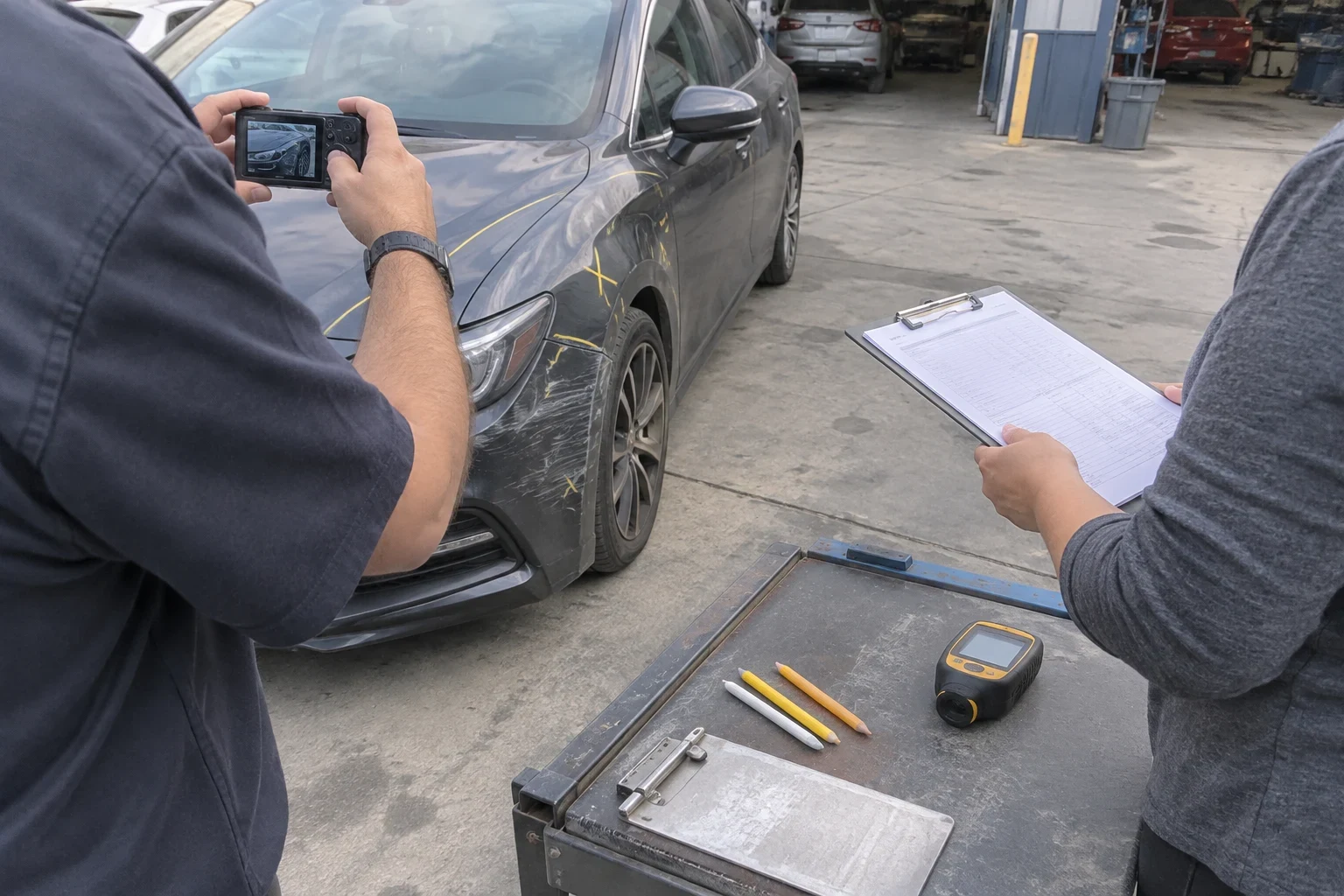
An insurance claim pays for what is written on the estimate. We inspect your car closely, photograph what we find and write each repair step to the manufacturer's procedure, so the adjuster sees the full job and your vehicle gets fixed properly.
How we handle the claim side of a repair
Most first estimates are written from a walk-around, often from photos. They catch the crushed bumper cover and the scraped door. They miss the bent reinforcement bar behind the cover, the cracked headlamp tab and the corrosion protection a welded panel needs. When those items are missing, the money for them is missing too, and that is where shortcuts start.
We write the repair the way it has to be done. Our shop is I-CAR Platinum certified, and we pull the manufacturer's repair procedures for your make and model before we price anything. Every operation, from the pre-repair scan to the cavity wax inside a replaced quarter panel, goes on the estimate with a reason and a photo behind it.
We work with your insurance company and its adjuster. We do not act as the adjuster and we do not decide coverage. Our job is to show exactly what your car needs and to repair it that way.
What our insurance claim work includes
Damage photos and notes
We photograph every damaged part, label it and note how the impact traveled through the structure. Those photos go with the estimate so the adjuster is not guessing.
Procedure-based estimate
Each line is tied to the factory repair procedure: which parts can be repaired, which must be replaced, and which are one-time-use fasteners. Seam sealer, weld-through primer and corrosion protection are listed as their own operations, because they are what keep a repair from rusting out a few years later.
Pre- and post-repair scans
Modern vehicles store fault codes after a hit, even when no warning light shows. We scan before teardown and again after the repair so nothing is left unresolved.
Supplements for hidden damage
Once panels come off, we often find more: a kinked bracket, a cracked radiator support, a sensor mount pushed out of position. We stop, document it and send a supplement to the insurer before going further.
Calibration of driver-assist systems
Radar and camera systems behind bumpers and windshields usually need calibration after the repair. We include it on the estimate when the procedure calls for it.
Plain explanations for you
We walk you through the estimate line by line, including your deductible and how your policy treats parts, so you know what is happening to your vehicle.
When it makes sense to bring us your claim
- The estimate looks thin
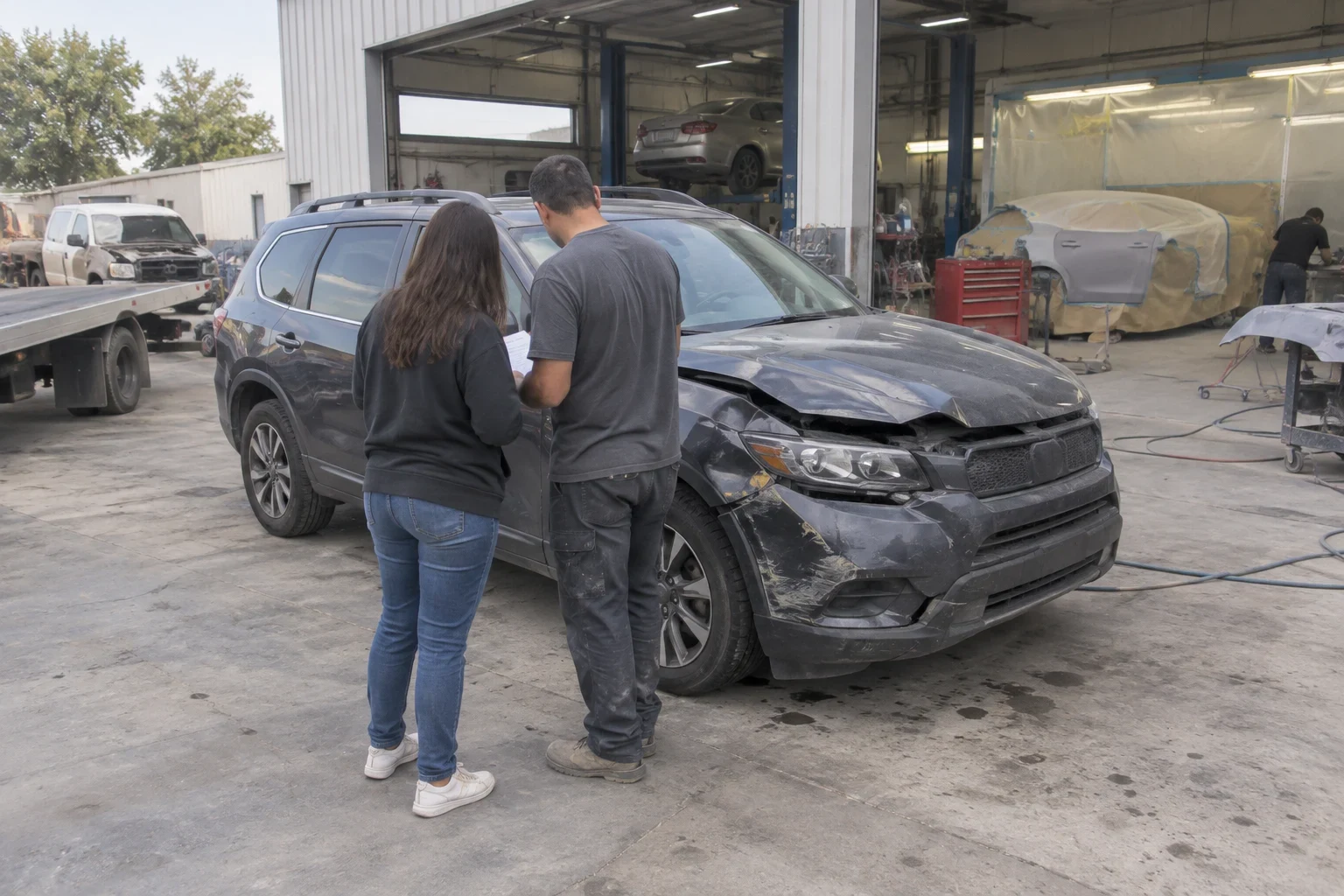
- If the insurer's estimate has only a handful of lines for a hit that pushed in the bumper or a fender, items are probably missing. We can inspect your car and compare that estimate against the damage we actually find.
- Panel gaps changed after the accident
- A hood that sits off center or a door that shuts differently points to damage behind the outer skin. That often means mounts or structural parts need work, sometimes frame straightening.
- Warning lights or odd sensor behavior
- Parking sensors that beep at nothing, lane-keep alerts that misfire or a new dash light after a minor bump suggest a sensor or its bracket was knocked out of place.
- You are not sure where to take the car
- State law here leaves the shop decision with you, the vehicle owner. Even if your insurer names a different shop, you can still have the repair done with us.
How a claim repair moves through our shop
- 1
Start with a phone call
You call us, tell us what happened and share your claim number if you already have one. We set a time for you to bring your vehicle to our shop.
- 2
Inspection and estimate
We inspect the damage, take photos, scan the vehicle's systems and write a procedure-based estimate. We then go over it with you before anything is sent.
- 3
Working with the adjuster
We send the estimate and photos to your insurer and answer the adjuster's questions about specific operations. Once the repair is approved, we order parts.
- 4
Teardown and supplements
With panels removed, we check for hidden damage. Anything new is photographed and submitted as a supplement before that work begins.
- 5
Repair, scan and final check
We complete the repair, refinish as needed, calibrate driver-assist systems and run a post-repair scan. Then we check gaps, fit and function before you pick up your car.
What decides your out-of-pocket cost
On most claims, what you pay comes down to your deductible and the parts terms in your policy. The total cost of the repair depends on what turns up once the damaged area is taken apart. We walk you through each factor before work begins, so the final bill holds no surprises.
- Your deductible
- When you file under your own collision coverage, you pay the deductible and the insurer covers the rest of the approved repair. When the other driver's insurer accepts fault, you usually owe no deductible.
- How your policy handles parts
- Some policies pay for new factory (OEM) parts. Others call for non-OEM or salvaged parts instead. Before the repair, we point out which type each line on the estimate uses and where the factory procedure calls for something different.
- Hidden damage
- Damage uncovered during teardown is added by supplement. That raises the total cost of the repair, but on an approved claim the insurer normally pays for it.
- Scans and calibrations
- Cars with radar, forward cameras and blind-spot sensors need extra steps after a repair. Those steps cost real labor and equipment time, so we list each one instead of leaving it off.
- Upgrades or prior damage
- Old damage unrelated to this accident, or extras you decide to add, fall outside the claim. We price those on their own and tell you before any work starts.
Common questions about insurance claim repairs
- Can I bring my car here if my insurer pointed me to another shop?
- Yes. Under California law the choice of repair shop belongs to you, not the insurance company. An insurer can suggest shops it works with often, but you are free to bring your vehicle to us, and we will deal directly with your adjuster.
- What if more damage shows up after the estimate is written?
- We pause that part of the job, photograph what we found and submit a supplement to the insurer. Work on those items begins once it is approved. We call you when this happens so you know where the repair stands.
- Should I file with my insurance company or the other driver's?
- That depends on who was at fault and what coverage you carry, and the decision is yours to make with your insurer. We can explain how the estimate and repair work either way, but coverage decisions are not ours to make.
- Why does your estimate come in higher than the insurer's?
- Usually it is because ours lists operations the first estimate skipped, like pre- and post-repair scans, sensor calibrations, corrosion protection or one-time-use bolts. Every line we write ties back to the factory procedure or a photo, so the adjuster can check it.
- Will non-factory parts be used on my car?
- That comes down to your policy. We tell you which parts are on the estimate before any work begins. Where the procedure requires a specific part for safety or fit, we document that for the adjuster.
Get the claim written right from the start
Bring your car to our shop and we will document the damage, write the estimate to the factory procedure and handle the paperwork with your adjuster. Drivers from Hanford, Tulare and nearby towns are welcome too.