ServicesCollision Repair
Collision Repair in Corcoran
After a crash, the damage you can see is usually only part of it. We take your vehicle apart far enough to find the bent brackets, cracked mounts and stretched seams, then rebuild it so the doors close right and the panels stay put.
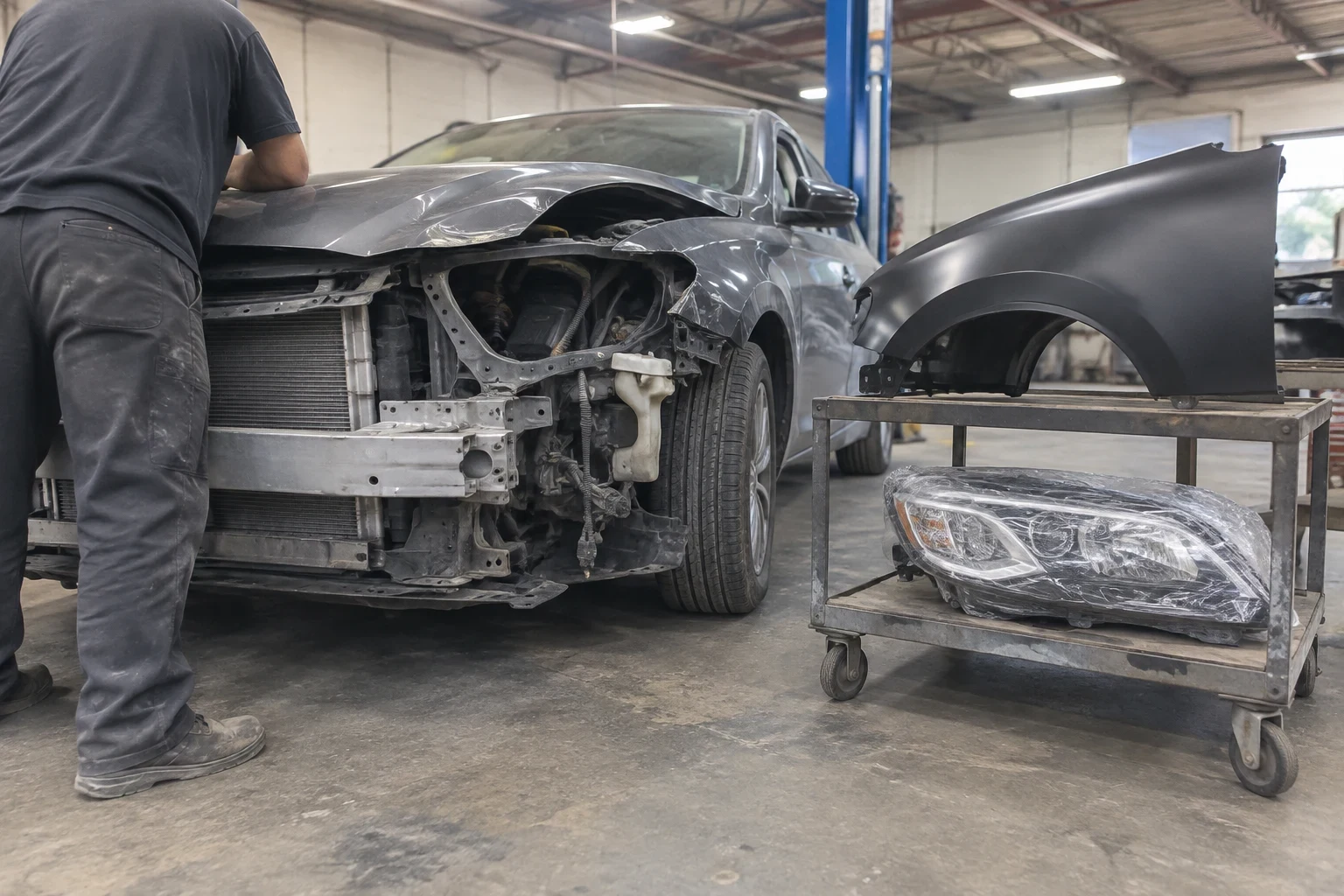
When collision repair is the right call
After an impact, collision repair restores your car's shape, strength and function to where they were before the accident. Depending on the hit, that might mean a new quarter panel, a rebuilt door shell, a replacement radiator support, or a unibody rail pulled back to its factory dimensions. Most jobs combine structural and cosmetic work, and the sequence matters: structure first, panels second, paint last.
Our shop is I-CAR Platinum certified, and that training shows in the small steps that decide how long a repair holds up. Spot welds go where the manufacturer specifies. Bare metal gets corrosion protection before seam sealer is applied. Cavity wax goes inside rocker panels and door bottoms. Leave out any one of those and the repair can look fine for a year, then start to bubble or rattle.
All of the work happens at our shop. You bring the car in, we write down what we find, and you know what is being repaired and why before anything starts.
What the repair includes
- Teardown and damage mapping
- We remove bumper covers, lamps and inner liners to see what the impact reached. Crushed energy absorbers, bent reinforcement bars and cracked headlamp tabs often hide behind an outer cover that looks only scuffed.
- Structural measuring
- We measure the body against factory reference points before deciding what to straighten or replace. If a rail or apron is out of spec, our frame straightening work comes first, because panels hung on a twisted structure will never line up.
- Panel replacement and welding
- Damaged panels are sectioned or replaced at the joints the manufacturer approves. We match weld type to the steel, since many newer cars use high-strength alloys that lose strength if overheated.
- Corrosion protection and sealing
- Every weld zone gets weld-through primer, seam sealer and cavity wax. This is the step a customer never sees and the one that keeps rust from starting inside a new panel.
- Fit, gaps and finish
- Doors, hood and trunk lid are adjusted until gaps run even and the edges sit flush. Then the panels go to our paint and refinishing booth for color matching and blending into the adjacent panels.
- Systems check
- We scan for stored fault codes after the repair and confirm lamps, sensors and airbag warning lights behave normally before we hand the keys back.
Signs your car needs more than a quick fix
Uneven panel gaps
A gap between the hood and fender that is wider on one end, or a door that sits proud of the body line, points to a shifted mount or bent structure behind it.
Doors or trunk that bind
If a door now needs a firm push to latch, the opening has likely changed shape. That is a measuring job, not a latch adjustment.
Pulling or odd tire wear
A car that drifts after a hit, or starts wearing the inside edge of one tire, may have a bent suspension mount or control arm.
New wind noise or water inside
Weatherstrips only seal when the panels close evenly. Whistling at highway speed or damp carpet after a car wash usually traces back to collision damage.
Warning lights after impact
Airbag, parking sensor or lane camera warnings after a minor bump mean a sensor or bracket was disturbed and needs checking.
How a collision job runs at our shop
- 1
Inspection and written estimate
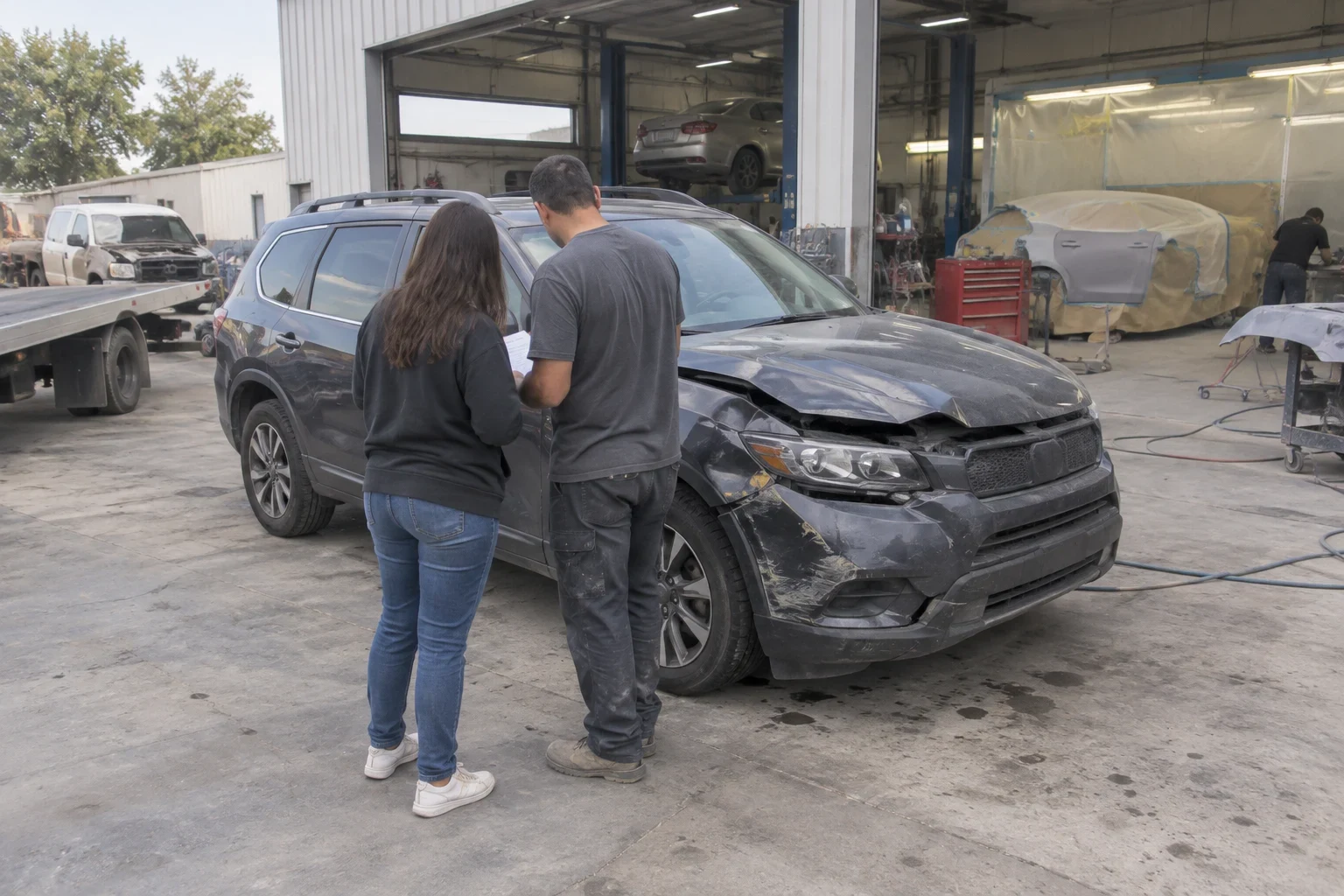
You bring the car in and we look it over with you. The estimate lists each part and labor operation, so you can see what is a replacement, what is a repair and what is refinishing.
- 2
Teardown and supplement
Once the damaged area is opened up, we photograph anything that was hidden and update the estimate. If an insurance claim is involved, we send those photos to the adjuster so nothing stalls.
- 3
Structure, then panels
We correct the structure, weld and seal new panels, and apply corrosion protection inside closed sections before anything is painted.
- 4
Paint and reassembly
Panels are primed, painted and blended, then clips, moldings and lamps go back on. We replace one-time-use clips and fasteners rather than reusing ones that will loosen.
- 5
Final check and pickup
We road test the car, check gaps in daylight and scan the systems again. You walk around it with us at pickup and we point out what was done.
What moves the cost of collision repair
Every collision lands differently, so a reliable number is hard to give before the car is opened up. Most of the price depends on how far the force traveled into the structure and which parts have to be replaced. These are the things we weigh when we write the estimate.
- Structural involvement
- Damage that stops at the bumper cover takes far less work than damage that reaches the rails, aprons or pillars. Measuring and straightening add labor time.
- Parts choice and availability
- New factory parts, quality aftermarket parts and repaired originals carry different costs. Your insurer's policy may decide which one is used, and we spell out the difference on the estimate.
- Materials and construction
- Aluminum panels, high-strength steel and panels joined with structural adhesive each call for specific tools and procedures. That can change both the labor hours and the parts list.
- Paint and blending
- Tri-coat and pearl colors take more steps to match than solid colors. Blending into the neighboring panels adds refinish time but keeps the color even in direct sun.
- Sensors and electronics
- Bumpers and windshields on newer cars often carry cameras or radar units that have to be checked or recalibrated after the repair.
Collision repair questions
Something not covered here? (559) 838-4456
Do I need an insurance estimate before bringing my car in?
No. You can bring your vehicle to us first, and we will inspect it and write our own estimate. If you are filing a claim, our Insurance Claims page explains how we handle documentation and supplements with the adjuster.
Why did the estimate go up after teardown?
The first estimate covers what is visible from the outside. Once covers and liners come off, we often find bent brackets or cracked mounts behind them. We photograph each item and show you before it is added.
Can I pick a different shop than the one my insurer recommends?
Yes. California law gives you the say over where your vehicle gets repaired. An insurer can point you toward a shop in its network, but it cannot require you to use that shop.
What sets the timeline for my repair?
Two things drive the schedule: how deep the damage runs and when the parts arrive. Swapping a bumper cover and fender wraps up sooner than a job with structural pulls across several panels. After teardown is finished and parts are on order, we give you a finish date you can plan around.
Will my car be as strong as before the accident?
That is the point of following factory repair procedures. We measure the structure, weld at the specified locations and restore corrosion protection, so the repaired areas behave like the originals in a later impact.
Is it worth fixing minor dents during a collision repair?
Often yes, since the car is already here and some panels may already be getting refinished. Small dings elsewhere can sometimes be handled with our dent repair work during the same visit.
Get your car looked at properly
Drivers from Corcoran, Hanford and Tulare bring their cars to us when they want the repair done once and done right. Tell us what happened and we will set a time for an inspection.